
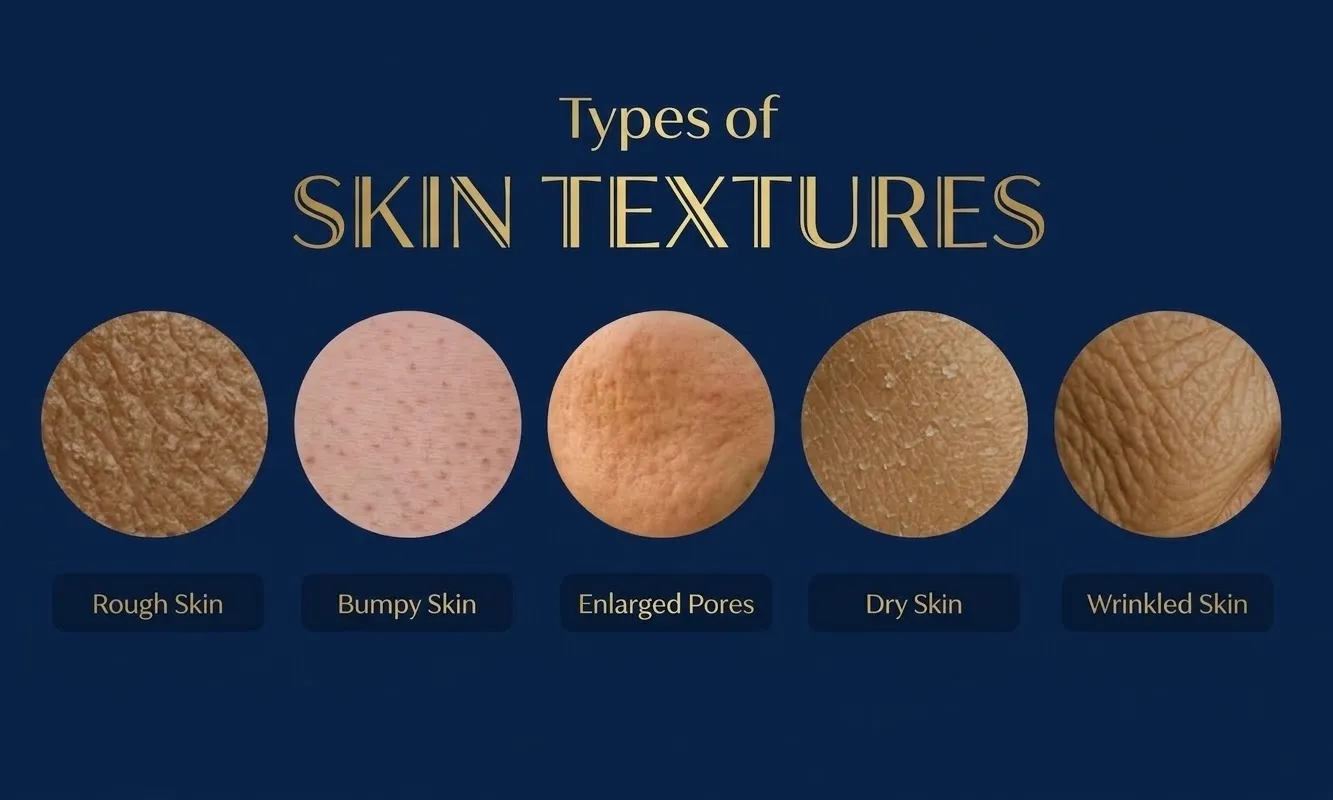
Rough patches. Little bumps that won’t shift. Foundation clinging to spots it shouldn’t. Skin texture problems are annoying partly because they’re subtle enough that nobody else notices them, but obvious enough that you see them every single time you look in a mirror.
About 89% of Americans buy skincare products, and 46% follow a daily routine. People are spending roughly $492 a year on skincare on average. And yet uneven texture remains one of those complaints that hangs around no matter how many products get thrown at it, usually because people are either doing too much or targeting the wrong thing entirely.
Fixing texture isn’t about adding ten new steps to your morning. It’s about understanding what’s actually causing the problem and being patient enough to let the right approach work.
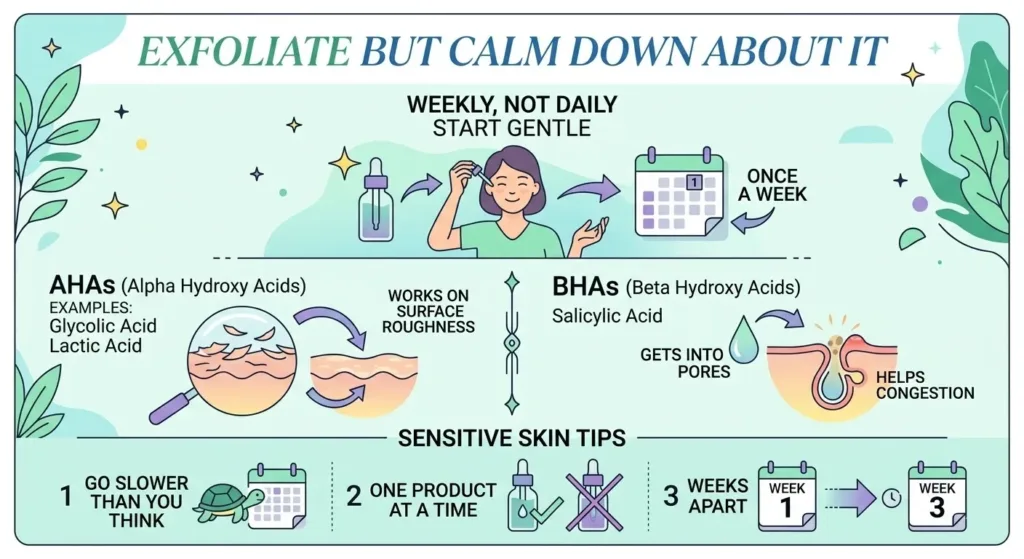
Exfoliate But Calm Down About It
Exfoliation is the fastest way to deal with that dull, rough surface layer of dead skin that makes everything look flat and feel bumpy. Professional treatments like chemical peels are a form of chemical exfoliation that work on the face, neck, and hands to address sun damage and aging signs. At-home options using AHAs and BHAs do a lighter version of the same job.
The problem is overdoing it. And loads of people overdo it. The whole “freeze, peel, and purge” mentality, treating irritation as proof that something is working is falling out of favour. Dermatologists and industry experts are pushing back hard against it heading into 2026, with the emphasis shifting toward regeneration over punishment.
If you’re new to exfoliating:
- Start with a gentle chemical exfoliant once a week not daily
- AHAs (like glycolic or lactic acid) work on surface roughness
- BHAs (salicylic acid) get into pores and help with small bumps and congestion
- Sensitive skin should go slower than you think necessary one product at a time, weeks apart
You can always increase frequency later. You can’t un-irritate skin you’ve hammered too fast.
Add Water Before You Seal It In
Sometimes texture that looks bad is actually dehydration wearing a disguise. Skin that’s low on water gets flaky in patches, makes fine lines look deeper than they are, and grabs onto makeup in weird places. Moisturiser alone doesn’t always fix this because moisturiser’s main job is sealing moisture in if there’s nothing to seal, you’re just putting a lid on an empty pot.
A hydrating serum or lightweight gel underneath your moisturiser adds the water that your skin is actually missing. Hyaluronic acid is the most common ingredient for this, and there’s a reason the hyaluronic acid market alone is projected to hit $14 billion by 2032 because the demand for hydration-focused products keeps climbing.
The method matters more than the product price. Apply the serum to slightly damp skin right after washing, while your face still has some water on it then lock it in with moisturiser on top. Give it a week and watch whether your skin feels less tight by the end of the day. If it does, you found the problem.
Retinoids Work If You Don’t Rush Them
Retinoids remain the gold standard for skin renewal. They’re not going anywhere. Retinoids are projected to hold a 23.5% share of the pharmaceutical-grade skincare category in 2026. Dermatologists keep recommending them because the evidence behind them is decades deep. They speed up cell turnover, which over time means smoother, more even-looking skin.
The part nobody likes hearing: this takes weeks. Sometimes months. It’s not a weekend project. And the early phase can actually make your skin look worse before it gets better dryness, peeling, sensitivity are all normal at the start.
Brands are catching onto the frustration, though. Encapsulated retinol, where the active ingredient is wrapped in tiny moisturising capsules for slower, gentler release, has been gaining ground as people look for the benefits without the raw irritation.
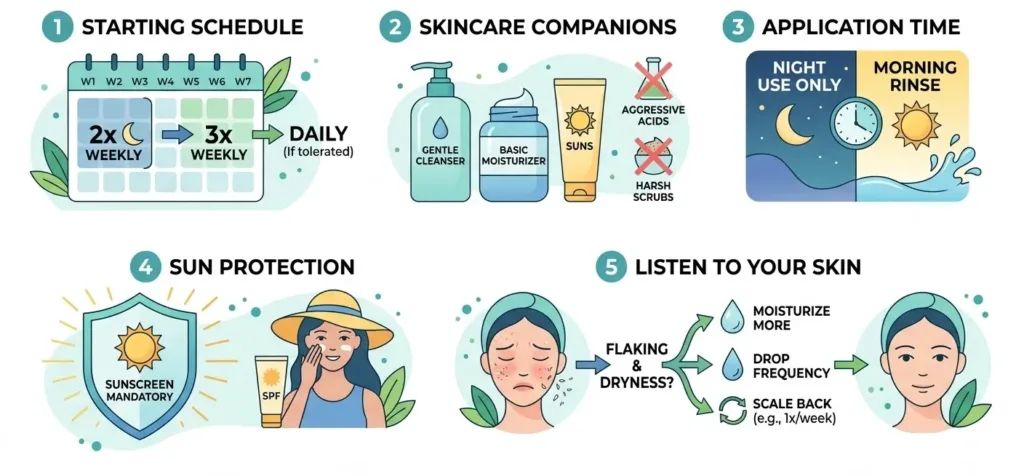
How to start without wrecking your face:
- Two nights a week to begin with, not every night
- Keep everything else gentle mild cleanser, basic moisturiser, nothing aggressive
- Night use only, wash it off in the morning
- Sunscreen is mandatory while using retinoids your skin is more sun-sensitive during this period
- Flaking and dryness? Scale back, don’t push through. Moisturise more and drop to once a week
Stop Breakouts Before They Leave a Mark
A single breakout isn’t just a few days of annoyance. It can leave behind rough, uneven patches that stick around for weeks after the actual spot is gone. Every time you pick at one and everyone picks, despite knowing better you’re turning a temporary bump into a longer texture problem.
Treating breakouts early matters more than treating them aggressively. When something starts forming, hit it with a targeted product you’ve used before and know doesn’t cause a reaction. Don’t suddenly introduce three new acids because you’re panicking about an event this weekend.
The bigger win is consistency. If you break out regularly, a whole-face routine that keeps things under control daily works better than scrambling with spot treatments when things flare up. Think of it like maintenance vs emergency repair the maintenance approach costs less effort over time and leaves fewer marks behind.
And the picking thing genuinely try to stop. Easier said than done. But a small bump that would’ve been gone in four days becomes three weeks of texture damage the moment you start squeezing.
Give Your Skin Barrier a Break
If your skin simultaneously feels oily AND tight AND dry AND irritated that’s a barrier screaming for help. A damaged barrier makes texture worse across the board. More bumps, more rough patches, more reactivity to products that normally wouldn’t bother you.
The 2026 skincare conversation has moved heavily toward barrier repair. Ceramide and lipid-rich formulas are replacing the old “slug your face in Vaseline” approach, and dermatologists are actively telling patients to simplify routines rather than stack more products.
Recovery mode looks like this: pause all the strong actives the exfoliants, the retinoids, the vitamin C serums. Strip back to a gentle cleanser, a good moisturiser, and sunscreen. That’s it. Stay there for a week or two. Maybe add a soothing serum with minimal ingredients if you want, but resist the urge to fix the problem by adding more products. That’s probably what caused it.
When the barrier rebuilds your skin stops feeling tight, the random bumps settle, products stop stinging on application then you can reintroduce actives one at a time. They’ll work better on repaired skin anyway.
Why Texture Goes Wrong in the First Place
Skin texture is just how smooth or even your skin feels and looks up close. When things are working well, good hydration, calm surface, regular cell turnover, the texture tends to sort itself out. When something’s off, you start seeing and feeling it.
The usual culprits:
- Dead skin buildup sitting on the surface making everything look flat and dull
- Dehydration sharpening fine lines and causing makeup to cling unevenly
- Post-breakout roughness that lingers weeks after the spot itself is gone
- Sun damage gradually changing how skin regenerates over time
- Barrier damage from too many active products used too aggressively
Most texture issues are fixable. They just require identifying which of these problems is actually yours because the fix for dehydration is the opposite of the fix for over-exfoliation, and getting it wrong makes things worse.
Small Changes, Stacked Up
None of this is complicated on its own. Exfoliate gently and not too often. Hydrate before you moisturise. Use retinoids slowly. Treat breakouts early instead of picking at them. Let your barrier recover when it’s struggling.
Skincare revenue is expected to grow from $215 billion in 2026 to nearly $468 billion by 2036. The industry is enormous and getting bigger, which means more products, more marketing, and more pressure to buy things. But texture improvement doesn’t come from spending more; it comes from doing fewer things consistently and giving your skin enough time to respond.

About author

Add comment